
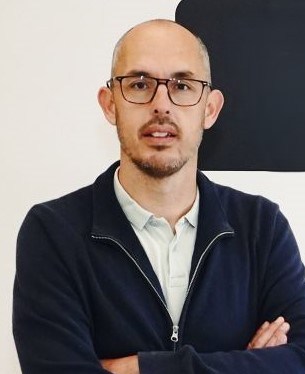
MANUEL ARTIME OMIL
UNED, SPAIN
I serve as an Assistant Professor in the Department of Moral and Political Philosophy at UNED, holding one certified six-year research period (2016-21) awarded by ANECA. My research aligns with the fields of Political Philosophy and Philosophy of History, with a particular emphasis on the political uses of the past.
During my postgraduate studies, the Spanish debate over historical memory was at its height. I soon became aware that this controversy signaled the emergence of a new generational sensibility, clashing with the political culture inherited from the Transition to democracy. I set out to find evidence for this hypothesis within academic historiography, and I observed that historians who opposed the memorialist initiatives shared a specific narrative regarding Spanish political and cultural modernization, which is now being challenged. Meanwhile, many younger historians saw the wave of memorialism as an opportunity to expand the boundaries of established democracy and advocated for retrieving the threads of the Republican tradition. Underlying this historiographical controversy, there was a philosophical debate concerning two contrasting ways of relating to temporality: while some argued that the past could be considered fully settled, others sought to interrogate the outstanding debts of Spain’s political history.
My contributions regarding this debate have been published in several articles and in my book España. En busca de un relato (Dykinson, 2016). This work has engaged a broad academic audience and garnered numerous citations. According to WorldCat, the volume is included in the catalogs of 63 libraries globally, including prestigious institutions such as Oxford, Cambridge, Princeton, Harvard, Yale, Brown, Connecticut, and Sciences Po Paris.
In recent years, the primary goal of my research has continued to be the same: to contribute to a deeper understanding of the transformations in political culture of the twenty-first century. The acceleration of contemporary events has forced me to shift my research focus towards democratic disaffection. The current geopolitical crisis has brought us back to an era of radical realism. In my recent work, I operate on the premise that this shift in political rhetoric is not innocuous but rather marks our entry into a new epoch. The current transition toward social models founded on hatred and exclusion involves the reconstruction of old historical imaginaries, which I propose to examine.